

Ankeny has grown quickly over the past decade, and with that growth has come a mix of established neighborhoods, new construction developments, and homeowners associations with detailed rules about what your fence can look like, how tall it can be, and where it can be placed. If you are also installing a pool, Iowa’s pool code adds another layer of requirements on top of whatever your HOA already expects.
At Iowa Fence, we work with Ankeny homeowners regularly, and this guide breaks down what HOA fence rules and pool code compliance typically involve, which fence styles tend to satisfy both, and how to avoid delays before your project even gets started.
Getting this right the first time matters. Ordering materials before an HOA reviews your plans, or installing a gate without the correct latching hardware, can mean redoing work that could have been done correctly from the start. A little planning upfront saves real time and money later.
Ankeny’s rapid growth over the past several years means new developments are still adding HOA guidelines, while older neighborhoods sometimes operate under rules written decades ago and updated only occasionally. Either situation can catch homeowners off guard if they assume their fence project will move as quickly as a simple landscaping change.
Understanding HOA Fence Rules in Ankeny, IA
Most HOAs in Ankeny’s newer developments regulate fencing closely to keep a consistent look across the neighborhood. Common restrictions include:
- Approved materials, which often exclude chain link in front yards or highly visible areas
- Maximum height limits, frequently capped between four and six feet depending on placement
- Required colors or finishes, especially for vinyl and aluminum fencing
- Setback requirements that dictate how close a fence can sit to a property line or sidewalk
- A formal approval process that must be completed before installation begins
Because these rules vary by development, the most important first step is requesting your HOA’s current architectural guidelines in writing rather than relying on what a neighbor’s fence looks like. Guidelines are updated periodically, and older fences on a street do not always reflect the current standard.
It also helps to ask whether your HOA requires a specific submission format, such as a site plan showing the fence line relative to your property boundaries, or photos of the exact style and color you plan to install. Some boards approve requests within a week, while others meet monthly, so timing your submission around the board’s review schedule can save weeks on your overall project timeline.
Iowa Pool Code Requirements for Fencing
If your project includes a pool, Iowa’s building code adds specific safety requirements that apply regardless of what your HOA allows. These typically include:
Height Requirements
Pool enclosures generally must reach a minimum height, often 48 inches, measured from the outside grade. This is a safety standard designed to prevent young children from climbing over unsupervised.
Self-Closing and Self-Latching Gates
Any gate providing access to the pool area typically must be self-closing and self-latching, with the latch mounted high enough that small children cannot easily reach it. This is one of the most commonly overlooked requirements during a DIY installation.
No Gaps or Climbable Features
Pool code usually restricts horizontal rails or footholds that a child could use to climb the fence, and gaps between vertical pickets are limited to prevent a child from squeezing through.
Because pool code requirements are non-negotiable for safety and permitting, it is worth confirming both HOA rules and code requirements before you fall in love with a specific fence style. In most cases, your local building department can confirm the exact height, latch placement, and gap requirements that apply to your specific pool and lot, and a final inspection is typically required before the pool can be used.
It is common for homeowners to assume their existing yard fence already meets pool code simply because it surrounds the property. In reality, pool code often applies specifically to the barrier immediately around the pool area itself, which may need to be a separate, dedicated enclosure even if a perimeter fence already exists elsewhere on the property.
Best Fence Styles for HOA and Pool Compliance
The good news is that several fence styles satisfy both HOA aesthetics and Iowa pool code when specified correctly.
Vinyl Fencing
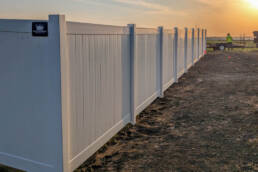
Vinyl fencing is one of the most common choices for Ankeny homeowners because it comes in HOA-friendly colors, holds a clean appearance for decades, and can be built with self-closing gate hardware to meet pool code height and latch requirements. Its solid panel design also happens to satisfy most no-climb requirements automatically, since there are no horizontal rails on the outward-facing side for a child to use as a foothold.
Aluminum Ornamental Fencing
Aluminum ornamental fencing is frequently approved by HOAs because of its upscale, wrought-iron style appearance, and its narrow picket spacing can be designed to meet pool code climbability rules while still offering an open, elegant look. Many Ankeny developments specifically favor aluminum ornamental styles for pool enclosures because they preserve sightlines for parents supervising children in the water while still meeting height and gap requirements.
Chain Link Fencing
While chain link is sometimes restricted in front yards, many HOAs still approve it for backyard pool enclosures because of its affordability and durability. Chain link fencing can meet pool code height requirements when installed with the correct gate hardware, and its small mesh openings naturally satisfy most climbability restrictions without any special modification.
Whichever style you choose, the details matter as much as the material itself. Post spacing, picket gaps, and gate hardware all need to be specified correctly from the start, since a fence that looks compliant from a distance can still fail an inspection over small details like latch height or gap width.
Working With Your HOA Before You Install
To avoid delays, most successful projects follow a similar process:
- Request written architectural guidelines directly from the HOA board or management company
- Confirm setback and height rules specific to your lot, since corner lots often have different requirements
- Submit a formal request with your chosen fence style, material, and color before ordering materials
- Confirm pool code requirements with your local building department if a pool is involved
- Keep written approval on file in case questions come up later
Our team routinely coordinates directly with HOA boards throughout the Ankeny area, and our custom entry and access gates can be built with self-closing, self-latching hardware from the start, so you are not retrofitting a gate after the fact to meet code.
We also find it helpful to bring a proposed material sample or product photo to any HOA discussion, since boards often approve requests faster when they can see exactly what is being proposed rather than reviewing a written description alone. If your HOA has a preferred vendor list or previously approved styles, checking that list first can also speed up the process considerably.
Common Mistakes That Delay Ankeny Fence Projects
Over the years, a handful of issues come up again and again when Ankeny homeowners run into delays on a fence or pool project. Knowing about these ahead of time can help you avoid the same setbacks.
Assuming Verbal Approval Is Enough
A board member mentioning that a fence style “should be fine” is not the same as formal written approval. If a dispute comes up later, only documented approval protects you. Always ask for confirmation in writing, even if it feels like an extra step.
Measuring Height From the Wrong Point
Fence height is sometimes measured from the ground on your side of the fence and sometimes from the lowest adjacent grade, depending on local code and HOA rules. On sloped lots, this distinction can change whether a fence meets requirements by several inches. Confirming the correct measurement point before installation avoids a costly surprise during inspection.
Overlooking Corner Lot and Easement Rules
Corner lots in many Ankeny developments have additional setback requirements to preserve sightlines for traffic and pedestrians. Utility easements can also restrict where posts may be placed, even on a standard lot. A quick call to the city or a review of your plat map before finalizing your fence line can prevent having to move a completed fence later.
Quick Compliance Checklist for Ankeny Homeowners
Before you move forward with a fence project in Ankeny, run through this short checklist:
- Have you requested your HOA’s current written fence guidelines?
- Do you know the maximum height and approved materials for your specific lot?
- If you have a pool, does your planned gate include self-closing, self-latching hardware?
- Have you confirmed setback distances from your property line and any easements?
- Do you have written HOA approval before ordering materials or scheduling installation?
Working through these questions early prevents the most common cause of delays we see: materials ordered before approval, or a gate installed without the hardware required for pool code. Taking an extra week upfront to confirm these details is almost always faster than discovering a problem after materials have already been ordered or installation has begun.
If you are unsure where to start, a quick phone call to your HOA management company and to Ankeny’s building department can usually answer most of these questions within a day or two. Having that information in hand before your first conversation with a fence company also tends to speed up the estimate and design process considerably, since we can recommend a style that is already known to fit your specific requirements.
Get a Free Estimate for Your Ankeny Fence Project
Navigating HOA rules and pool code requirements does not have to slow down your project. Our fence installation services in Ankeny are built around getting it right the first time, from material selection through gate hardware that meets code from day one.
We handle the details that most often trip up an HOA submission or a pool code inspection, from gate latch height to picket spacing, so you can move through approval and installation without surprises. Our team is based right here in central Iowa, and we have worked with enough Ankeny developments to know which boards tend to move quickly and which ones need extra lead time.
Get a Free Estimate and we will help you choose a fence style that satisfies your HOA, meets Iowa pool code, and holds up to central Iowa weather for years to come.
Want Practical Fencing Advice?
Get expert tips, central Iowa HOA guidance, material comparisons, installation best practices, and real homeowner insights from the Iowa Fence team in Bondurant.
Like this article? Spread the word!
Related Posts
Chain Link Fencing in Grimes, IA: Durable, Affordable Security Solutions for Homes, Businesses, and Commercial Properties from Iowa Fence
Need chain link fencing in Grimes, IA? Iowa Fence installs durable, affordable fences for…
Wood vs. Vinyl Fencing: Which Holds Up Better in Central Iowa Winters?
Wondering whether wood or vinyl fencing holds up better in Iowa winters? Compare…
How to Prepare Your Yard Before Your New Fence Installation
Get your yard ready before installation day with tips on clearing lines, HOA rules, and…