

Choosing between wood and vinyl fencing is one of the most common decisions central Iowa homeowners face when planning a new fence. Both materials offer real advantages, but Iowa’s freeze and thaw cycles, humid summers, and heavy snow loads put every fence to the test over time. Understanding how each material performs through a full Iowa winter can help you choose a fence that still looks great and functions well for years, not just on installation day.
Homeowners in West Des Moines and across the metro tend to ask the same question every fall: which material will actually hold up once the ground freezes and thaws a few times? The honest answer is that both wood and vinyl can perform well in central Iowa, but each comes with its own tradeoffs in appearance, maintenance, and how the fence is installed below ground.
In this guide, we will compare wood and vinyl fencing side by side, look at how frost heave affects both materials, and help you decide which option fits your yard, your budget, and how much maintenance you want to take on.
Wood Fencing in Central Iowa: Strength and Character
A Classic, Natural Look
Wood fencing remains popular in central Iowa because of the warmth and character it brings to a property. Cedar fencing in particular offers a rich grain and natural resistance to insects and rot, which makes it a strong choice for homeowners who want a traditional look without sacrificing durability. Wood also blends easily with landscaping, decks, and pergolas, so it tends to fit a wide range of home styles, from older established neighborhoods to newer builds.
Beyond appearance, wood offers flexibility that some other materials do not. It can be stained in a range of tones, from a natural cedar finish to a darker, more modern look, and individual sections can be customized in height or style without needing to replace an entire run of fence. For homeowners who want a privacy fence in the backyard and a shorter, more decorative style closer to the street, wood makes that kind of mixed approach fairly straightforward.
What Wood Fencing Requires Over Time
The tradeoff with wood is upkeep. To keep a wood fence performing well through Iowa’s weather swings, homeowners should plan for:
- Periodic staining or sealing to protect against moisture and UV exposure
- Checking boards each spring for warping, splitting, or loose fasteners after winter
- Replacing individual boards as needed rather than waiting for widespread damage
- Keeping soil and mulch from piling against the base of posts, which traps moisture
- Watching for signs of insect activity, particularly in older boards near the ground
- Re-tightening or replacing fasteners that loosen as wood expands and contracts with humidity
None of this is difficult, but it does mean wood fencing asks more of the homeowner over its lifespan than some other materials. Most homeowners find that a light staining schedule every two to three years, combined with a quick spring inspection, keeps a wood fence looking sharp well past the ten-year mark.
Vinyl Fencing in Central Iowa: Low Maintenance and Consistency
Built to Handle Iowa Weather
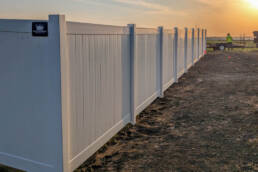
Vinyl fencing has grown in popularity across central Iowa because it does not rot, warp, or need repainting. It holds its color through harsh sun exposure and heavy snow, and it will not splinter or crack the way aging wood can. For homeowners who want a clean, consistent appearance without a maintenance routine, vinyl is often the more practical long-term choice, especially for privacy fencing and pool enclosures where a smooth, uniform surface matters.
Vinyl panels are also less affected by the humidity swings that cause wood to expand and contract throughout the year. Because the material itself does not absorb moisture, boards stay straight and gates stay aligned longer without the periodic adjustments that wood sometimes needs. This makes vinyl a good fit for homeowners who want a fence that looks the same in year ten as it did on installation day.
Where Vinyl Falls Short
Vinyl is not without limitations. It typically costs more upfront than a basic wood fence, and while quality vinyl resists cracking in cold temperatures, cheaper vinyl products can become brittle during extreme cold snaps. It also does not offer the same natural, rustic appearance that many homeowners want for a farmhouse-style or heavily landscaped yard. If a vinyl panel is ever damaged, for example from a fallen tree branch during a storm, replacement panels need to match the existing color and style closely, which can be harder to source for older installations. The choice often comes down to whether you prioritize appearance and character or long-term simplicity.
How Frost Heave Impacts Wood and Vinyl Fences
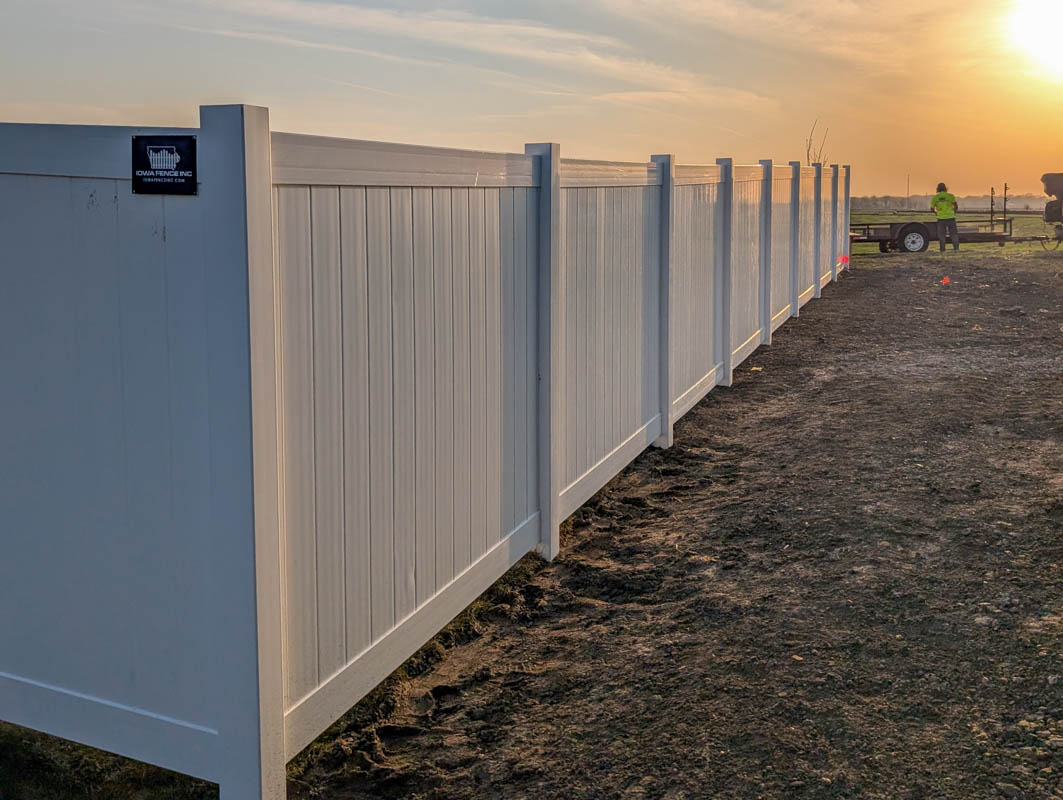
Frost heave is one of the biggest threats to any fence in central Iowa, regardless of the material used above ground. When posts are set in concrete, the ground around them expands and contracts as it freezes and thaws throughout the winter. Over several seasons, this movement can push posts upward, leaving fences leaning, gates out of alignment, and panels pulling apart at the seams.
This is true whether the fence above ground is wood or vinyl, because the real vulnerability is below the surface. The most reliable way to prevent frost heave damage is to avoid concrete altogether and drive posts deep enough to sit below the frost line, where ground movement has far less effect. A fence that starts leaning within just a few winters of installation is usually a sign that the posts were not set deep enough or were poured with concrete that trapped moisture against the post base.
Iowa’s frost line typically reaches down several feet during a cold winter, which is deeper than many fence installers account for. Posts that are only set two to three feet down, or that rely on a small concrete footing near the surface, are far more exposed to the upward pressure that comes with repeated freezing and thawing. Over three or four winters, that pressure can be enough to visibly tilt a post, crack a footing, or pull a gate out of alignment.
Cost, Maintenance, and Longevity Compared
When central Iowa homeowners weigh wood against vinyl, the decision usually comes down to four factors:
- Upfront cost: Wood is typically less expensive to install initially, while vinyl carries a higher upfront investment.
- Ongoing maintenance: Wood needs regular staining, sealing, and board replacement. Vinyl needs occasional washing and little else.
- Appearance over time: Wood ages and weathers, developing a natural patina unless it is consistently maintained. Vinyl keeps a consistent look for decades.
- Long-term value: Vinyl often costs less over a 15 to 20 year span once maintenance is factored in, even though the initial price is higher.
There is no universally correct answer. A family who enjoys yard projects and wants a classic wood look may find the maintenance worthwhile, while a busy household that wants to install a fence once and rarely think about it again will likely lean toward vinyl.
It is also worth considering resale value. Many buyers view a well-maintained vinyl fence as a low-maintenance selling point, since it signals that they will not inherit a maintenance project. A wood fence can carry similar appeal if it has been well cared for, but a neglected wood fence with visible rot or warping can occasionally become a point of negotiation during a home sale.
Why Installation Quality Matters More Than Material Choice
It is easy to spend most of the decision-making process comparing wood and vinyl as products, but the installation method behind either material often has a bigger impact on long-term performance than the material itself. A poorly installed vinyl fence with shallow, concrete-set posts can fail faster than a well-installed wood fence with posts driven deep below the frost line.
This is one of the reasons we avoid concrete footings altogether. Concrete can actually make frost heave worse in some soil types, since it creates a rigid surface for expanding, freezing soil to grip and push against. Driving posts deep into undisturbed soil, without concrete, gives the ground room to shift slightly around the post each winter without pushing it upward. Over a 20 or 30 year lifespan, that difference in installation method often matters more than whether the fence above ground is wood or vinyl.
Which Fence Is Right for Your Central Iowa Yard?
Before making a final decision, it helps to run through a short checklist:
- Do you want a natural wood look, or do you prefer a consistent, low-maintenance surface?
- How much time are you realistically willing to spend on fence upkeep each year?
- Is your fence going around a pool, patio, or high-visibility area where appearance matters most?
- Are you planning to stay in your home long enough to benefit from vinyl’s lower long-term cost?
- Has your yard shown any signs of drainage issues or standing water, which can affect either material’s post stability?
If your current fence is already leaning, gapping, or showing rot, it may be worth a closer look before you invest in a replacement. Our earlier post on the signs your fence needs repair or replacement walks through the most common warning signs homeowners run into after a rough Iowa winter, and can help you decide whether a repair or a full replacement makes more sense for your situation.
Many homeowners also find that the decision becomes easier once they think about how the fence will be used day to day. A backyard with kids and pets running through it regularly may benefit from the scratch resistance of vinyl, while a front-yard accent fence that is more decorative than functional might be a great place to enjoy the natural character of wood without worrying as much about heavy daily wear.
Ready to Choose the Right Fence for Your Home?
Whether you lean toward the classic warmth of cedar or the low-maintenance consistency of vinyl, the most important factor is how the fence is installed below ground. Posts driven deep and set without concrete are far less likely to heave, lean, or fail after a few Iowa winters, regardless of which material you choose above the surface.
Our team can walk you through both options, talk through your yard’s specific layout, and help you land on the fence that fits your home and your budget. We install every fence ourselves, with no subcontractors, using posts driven deep enough to sit below the frost line so you are not dealing with heaving or leaning a few winters down the road.
Get a Free Estimate today and let us help you build a fence, whether wood or vinyl, that holds up to real central Iowa weather, year after year.
Want Practical Fencing Advice?
Get expert tips, central Iowa HOA guidance, material comparisons, installation best practices, and real homeowner insights from the Iowa Fence team in Bondurant.
Like this article? Spread the word!
Related Posts
Expert Vinyl Fence Installation in Altoona, IA – Why Iowa Fence is the Top Choice
Expert vinyl fence installation in Altoona, IA by Iowa Fence delivers durable,…
Iowa Fence’s Guide to HOA and Pool Code Compliant Fencing in Ankeny, IA
Planning a fence or pool enclosure in Ankeny, IA? Learn HOA and pool code requirements…
How to Prepare Your Yard Before Your New Fence Installation
Get your yard ready before installation day with tips on clearing lines, HOA rules, and…